If you’re still relying on emails and cold calls to close deals in 2026, you’re already behind. But here are WhatsApp CRM benefits
Today’s customers don’t want to be chased — they want instant, personalized conversations. And that’s exactly where WhatsApp CRM is changing the game.
Businesses that have adopted WhatsApp CRM are seeing:
- Faster response times
- Higher engagement
- And most importantly… massive sales growth
Let’s break down the WhatsApp CRM benefits that are quietly helping smart businesses dominate their markets.
What is WhatsApp CRM?
A WhatsApp CRM is a system that integrates customer relationship management with WhatsApp messaging.
Instead of managing leads through scattered tools, you:
- Capture leads
- Track conversations
- Automate replies
- Close sales
—all inside WhatsApp.
Key Difference:
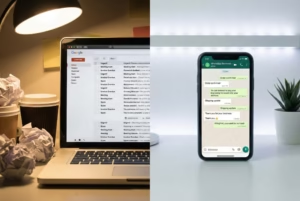
| Traditional CRM | WhatsApp CRM |
|---|---|
| Email-based | Chat-based |
| Slow communication | Instant replies |
| Low engagement | High engagement |
Why Businesses Are Switching to WhatsApp CRM in 2026
Here’s the reality:
- Emails have ~20% open rate
- WhatsApp messages have 90%+ open rate
Customers prefer messaging over forms, calls, or emails.
👉 The result?
Businesses are moving from “follow-up systems” → to “conversation systems”
7 WhatsApp CRM Benefits That Boost Sales
1. Instant Customer Response = Higher Conversions
Speed is everything in sales.
With WhatsApp CRM:
- Leads get replies in seconds
- No waiting, no drop-offs
👉 Faster response = higher conversion rate
2. Automated Follow-Ups That Never Miss a Lead
Most businesses lose sales due to:
- Forgetting follow-ups
- Delayed responses
WhatsApp CRM solves this with:
- Auto reminders
- Scheduled follow-ups
- Trigger-based messages
💡 Result: Zero missed opportunities
3. Personalized Messaging at Scale
Customers hate generic messages.
With WhatsApp CRM:
- Use customer names
- Track behavior
- Send tailored offers
👉 You get 1-on-1 personalization… at scale
4. Higher Open Rates Than Email & SMS
Let’s be honest:
- Emails get ignored
- SMS feels intrusive
But WhatsApp?
👉 It feels personal.
That’s why:
- Messages are opened instantly
- Engagement is naturally high
5. Seamless Lead Management in One Place
No more juggling spreadsheets, emails, and calls.
WhatsApp CRM lets you:
- Tag leads
- Track stages
- Assign conversations
👉 Everything stays organized and actionable.
6. Improved Customer Retention & Loyalty
Retention = real profit.
With WhatsApp CRM, you can:
- Send updates
- Offer support
- Re-engage customers
👉 Customers feel connected → they buy again.
7. Sales Funnel Automation on Autopilot
Imagine this:
A lead messages you →
They get an instant reply →
They receive follow-ups →
They get converted…
Without manual effort.
That’s the power of WhatsApp CRM automation.
Real Example: How Businesses Are Scaling
Let’s say you sell fabrics (like your business):
Without WhatsApp CRM:
- You manually reply
- Follow-ups get delayed
- Leads go cold
With WhatsApp CRM:
- Instant product catalog sent
- Automated follow-up after 24 hrs
- Personalized offers
👉 Result: 2x–5x increase in conversions
WhatsApp CRM vs Traditional CRM
| Feature | Traditional CRM | WhatsApp CRM |
|---|---|---|
| Speed | Slow | Instant |
| Engagement | Low | High |
| Automation | Limited | Advanced |
| User Experience | Complex | Simple |
How to Get Started with WhatsApp CRM
Getting started is simpler than you think:
- Get WhatsApp Business API
- Choose a CRM platform
- Integrate automation workflows
- Start capturing leads
👉 With OneClickAPI, you can:
- Integrate WhatsApp instantly
- Automate conversations
- Scale your sales effortlessly
You might be interested in: 7 WhatsApp CRM Features That Are Quietly 10Xing Sales (Most Businesses Ignore #4)
Conclusion
The future of CRM is not dashboards.
It’s conversations.
Businesses that adopt WhatsApp CRM early will:
- Close faster
- Retain better
- Scale smarter
👉 The question is: Are you still managing leads… or actually converting them?