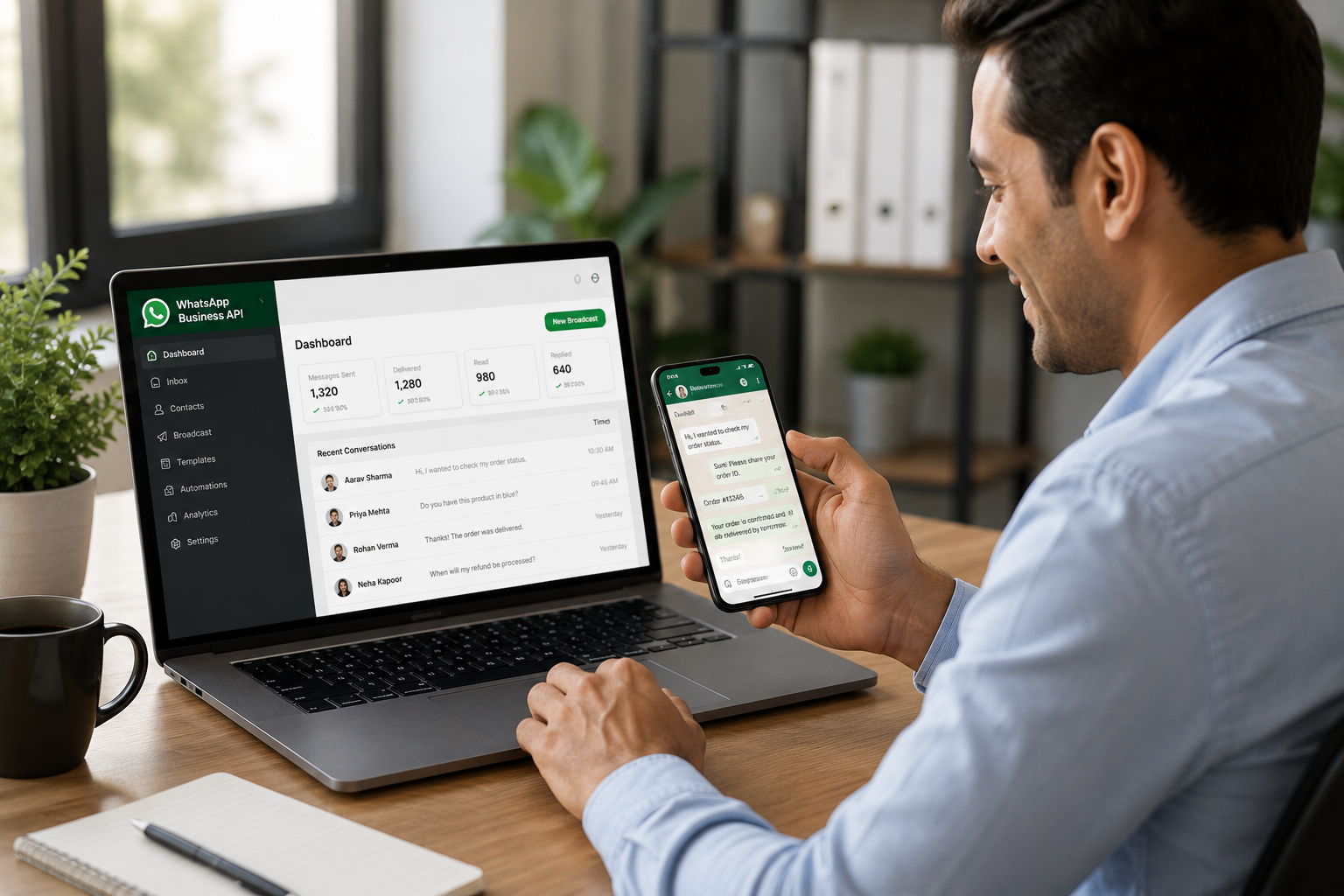
Customer support has become one of the biggest operational expenses for small businesses. From hiring support agents to managing phone systems and handling endless email tickets, the costs can quickly spiral out of control.
At the same time, customer expectations are higher than ever. People want instant replies, quick problem resolution, and communication on platforms they already use daily.
That’s exactly why businesses are switching to WhatsApp API for customer support.
Instead of relying entirely on expensive call centers or slow email support, businesses are using WhatsApp automation, chatbots, and centralized messaging systems to handle customer conversations more efficiently — while spending less money.
In this guide, we’ll explore how small businesses are dramatically reducing support costs using WhatsApp API in 2026.
Why Customer Support Costs Are Rising for Small Businesses
Customer service used to be simple. A phone number and an email address were enough.
Today, customers expect:
- Instant replies
- 24/7 availability
- Personalized responses
- Multi-device communication
- Real-time updates
Meeting these expectations using traditional methods is expensive.
The Hidden Costs of Traditional Support
Many businesses underestimate the true cost of customer support.
Expenses include:
- Salaries for support staff
- Phone bills
- CRM software
- Ticketing systems
- Training costs
- Missed leads due to slow replies
For small businesses, this creates a major challenge.
Hiring more agents increases costs. But failing to respond quickly damages customer trust and retention.
This is where WhatsApp Business API changes the game.
What Is WhatsApp API for Customer Support?
WhatsApp API is a business communication solution designed for medium and large-scale messaging.
Unlike the regular WhatsApp Business app, the API allows businesses to:
- Automate conversations
- Use multiple agents on one number
- Integrate CRM systems
- Send automated notifications
- Create chatbot workflows
- Manage thousands of customer conversations
Since billions of people already use WhatsApp daily, businesses can support customers on a platform they already trust.
WhatsApp Business App vs WhatsApp API
| Feature | WhatsApp Business App | WhatsApp API |
|---|---|---|
| Multi-agent access | No | Yes |
| Automation | Limited | Advanced |
| CRM Integration | No | Yes |
| Chatbot Support | Basic | Full |
| Scalable Messaging | Limited | High |
| Team Collaboration | No | Yes |
For businesses receiving high customer inquiries, the API becomes far more cost-effective over time
How WhatsApp API Helps Reduce Customer Support Costs
1. Automating Repetitive Customer Queries
A huge percentage of customer questions are repetitive.
Examples include:
- “Where is my order?”
- “What are your business hours?”
- “How much does shipping cost?”
- “Can I return this product?”
Instead of hiring agents to answer the same questions repeatedly, businesses use automated WhatsApp workflows.
Chatbots can instantly respond to common questions 24/7 without human involvement.
This dramatically reduces labor costs.
2. Reducing Support Staff Workload
Support teams often waste time switching between multiple tools:
- Live chat
- Instagram DMs
- Facebook Messenger
- Phone calls
WhatsApp API centralizes communication into one system.
With shared inboxes and automation, fewer agents can handle more customers efficiently.
Many businesses reduce support workload by 30–50% after implementing WhatsApp automation.
3. Faster Response Times
Customers hate waiting.
Long response times often lead to:
- Lost sales
- Refund requests
- Negative reviews
- Customer frustration
WhatsApp API enables instant automated replies.
Even simple automation like greeting messages and FAQ bots can significantly improve response speed.
Fast responses increase customer satisfaction while reducing the need for large support teams.
4. Lower Phone Support Costs
Phone support is expensive.
Businesses pay for:
- Telecom systems
- Call center staff
- Long support calls
- Missed call management
WhatsApp messaging is cheaper and more scalable.
Instead of long calls, customers can simply send messages and receive quick answers.
This reduces phone dependency and lowers operational expenses.
5. Reducing Ticket Volume
Traditional ticket systems create delays and bottlenecks.
WhatsApp conversations feel faster and more natural.
Customers often resolve issues quicker through messaging compared to email-based ticket systems.
This helps businesses handle more support requests with fewer resources.
Real Examples of Businesses Saving Money With WhatsApp API
E-Commerce Stores
Online stores use WhatsApp API to automate:
- Order confirmations
- Shipping updates
- Delivery tracking
- Return requests
This reduces customer inquiries and support tickets significantly.
Local Service Businesses
Salons, repair services, and clinics automate:
- Appointment reminders
- Booking confirmations
- FAQs
- Customer follow-ups
This minimizes missed appointments and reduces administrative workload.
D2C Brands
Direct-to-consumer brands use WhatsApp chatbots for:
- Product recommendations
- Order assistance
- Customer feedback
- Post-purchase support
Automation allows smaller teams to support large customer bases efficiently.
Top Features That Make WhatsApp API Cost-Effective
Automated Replies
Businesses can create instant responses for:
- FAQs
- Order updates
- Business hours
- Payment confirmations
This reduces agent involvement.
Shared Team Inbox
Multiple support agents can manage conversations from one business number.
This improves collaboration and response speed.
CRM Integrations
WhatsApp API integrates with CRMs and support tools.
This gives agents customer history instantly, reducing handling time.
AI Chatbot Automation
AI-powered chatbots can:
- Understand customer intent
- Answer complex questions
- Route conversations
- Qualify leads
Advanced automation further lowers support costs.
Broadcast Messaging
Businesses can send updates, promotions, and reminders to customers directly through WhatsApp.
This reduces reliance on expensive SMS campaigns.
How to Start Using WhatsApp API for Customer Support
Step 1: Choose a WhatsApp API Provider
Selecting the right provider is important.
Look for:
- Affordable pricing
- Easy onboarding
- Automation features
- CRM integrations
- Reliable support
Step 2: Connect Your Business Number
Businesses can use an existing number or create a new dedicated support line.
Step 3: Set Up Automation Workflows
Start with simple automations like:
- Welcome messages
- FAQ bots
- Order tracking
- Appointment reminders
Over time, businesses can expand automation further.
Step 4: Train Your Support Team
Even with automation, human support remains important.
Train agents to:
- Handle escalations
- Personalize conversations
- Use CRM tools effectively
Why OneClickAPI.com Is the Best Choice for Small Businesses
OneClickAPI.com helps businesses launch WhatsApp customer support systems quickly without technical complexity.
Key advantages include:
- Easy WhatsApp API setup
- Automation workflows
- CRM integrations
- Shared team inbox
- Affordable pricing
- Scalable support solutions
Whether you run an e-commerce store, local business, or startup, OneClickAPI makes it simple to automate customer support and reduce operational costs.
You might be interested in: Why Every Small Business Is Switching to WhatsApp API in 2026 (And Growing Faster)
Final Thoughts
Customer support is no longer just about answering questions.
It’s about delivering fast, efficient, and scalable communication without increasing costs.
That’s why businesses worldwide are adopting WhatsApp API for customer support.
By automating repetitive tasks, reducing support workload, and improving response times, small businesses can save money while delivering a better customer experience.
In 2026, businesses that embrace conversational automation will have a major competitive advantage.